
Leelanau Scheduled and Actual Release
A projected date is an estimate or scheduled endpoint based on the record as it stands. An actual release date records what happened. For the Leelanau County Correctional Facility, the local term is outdate. Jail staff assign it after sentencing on all charges, then apply ordered time-served credit and any lawful Sheriff's good time. A person held before trial does not yet have that kind of fixed sentence endpoint. Bond, dismissal, a plea, sentencing, or a new hold can each alter the next step.
State-prison records use different labels. The Michigan Department of Corrections OTIS profile may show Earliest Release Date, Maximum Discharge Date, Date Paroled, and Discharge Date. These fields do not mean the same thing. Earliest Release Date marks initial parole jurisdiction for an ordinary indeterminate sentence. Date Paroled records physical departure from prison into supervision. Discharge Date records the later end of MDOC jurisdiction.
Find a Leelanau Release Date
Start with the last verified place of custody. A county jail outdate does not appear in OTIS, and an MDOC eligibility date is not calculated by Leelanau Jail Control. If the person left the county jail for state prison, that event was a transfer. The later projected release must then be read through MDOC. The Leelanau County released inmate lookup provides a wider record path when the current system is uncertain.
- Confirm whether the person is in Leelanau county custody, an MDOC institution, another county jail, or federal custody.
- For a Leelanau sentence, call Jail Control at 231-256-8661 and ask for the current outdate and the inputs used.
- Ask whether all charges are sentenced, whether another hold exists, and whether the person was boarded from another county.
- For MDOC custody, search OTIS by MDOC number when known or by name with identity filters.
- Open the profile. Read Current Status, Earliest Release Date, Maximum Discharge Date, and any Date Paroled or Discharge Date.
- Use the sentencing court record when jail credit, sentence structure, or an amended judgment needs confirmation.
Leelanau shares court paths with the 86th District and 13th Circuit systems. The official county criminal-search launcher connects those routes. A court judgment gives the legal sentence and ordered credit. Jail Control handles the operational county outdate. MDOC applies state law and the judgment to its own dates. Keeping those roles separate prevents a court event from being mistaken for a completed release.
Leelanau Jail Outdate Calculation
For a Leelanau jail sentence, staff first need the sentence start, ordered jail credit, and the way multiple sentences run. Concurrent sentences run at the same time. Consecutive sentences run one after another. The inmate must be sentenced on all charges before the jail assigns its outdate. A new judgment, corrected credit, or unresolved charge can therefore prevent a stable projected date.
MCL 51.282 provides one day of county-jail good time for each six days of sentence when the prisoner has no rule violations. Leelanau describes the result as five days per month. The sheriff may forfeit earned good time for infractions and may restore some credit after minor infractions under the statute. That is why a simple sentence-length division is unreliable. Eligibility and conduct both matter.
The official Leelanau Sheriff corrections page also says boarded inmates get an outdate from the sentencing county. Leelanau's rule must not be imposed on another county's sentence. Ask which county controls the outdate before using any local estimate.

The county source ties its good-time rule and release timing to locally sentenced inmates, not to every person who passes through the jail.
Leelanau Good Time Versus MDOC
County good time and state truth in sentencing are separate systems. Leelanau's jail outdate can use the one-for-six county credit under MCL 51.282. For covered contemporary MDOC sentences, Michigan requires the full judicial minimum in prison before ordinary parole consideration. It is not accurate to call Michigan an 85-percent service state. The minimum creates a point of parole consideration, not a promise of release.
Truth in sentencing applies to specified assaultive crimes committed on or after December 15, 1998 and other crimes committed on or after December 15, 2000. Covered sentences do not reduce the minimum through good-time or disciplinary credits. Misconduct can create disciplinary time for the Board to consider. The parole-jurisdiction rules in MCL 791.234 also include sentence-specific limits, consecutive terms, and special life-sentence provisions.
Older offense dates can fall under legacy rules. Traditional good time does not apply to crimes after April 1, 1987. Later pre-truth-in-sentencing crimes may involve disciplinary credits under the applicable law. These older regimes cannot be applied as a broad discount to a current case. The offense date, judgment, sentence type, and governing statute control the result.
- Outdate
- The county jail's calculated end date for a sentenced stay.
- ERD
- Earliest Release Date, when the Parole Board first gains ordinary jurisdiction.
- Maximum discharge
- The controlling state maximum endpoint if parole does not occur, subject to lawful corrections.
- Parole
- Release from prison into continued MDOC supervision.
Read Leelanau MDOC Release Dates
OTIS does not present one universal projected-release field. Search by MDOC number for the best identity match. With a name, select all statuses when looking for a former prisoner and compare aliases, birth year, physical descriptors, sentence county, and court file. Then open the profile. A result row alone does not provide enough context.
Read Current Status before the dates. “PAROLE” means the person left prison but remains within MDOC jurisdiction. “DISCHRG” means MDOC jurisdiction ended for the displayed matter. “PRISON” can include special situations beyond a normal prison assignment, so the location and sentence context must also be read. OTIS excludes jail-only Leelanau cases and removes public records three years after the latest supervision discharge.
The official MDOC release-date FAQ explains Earliest Release Date and Maximum Discharge Date.
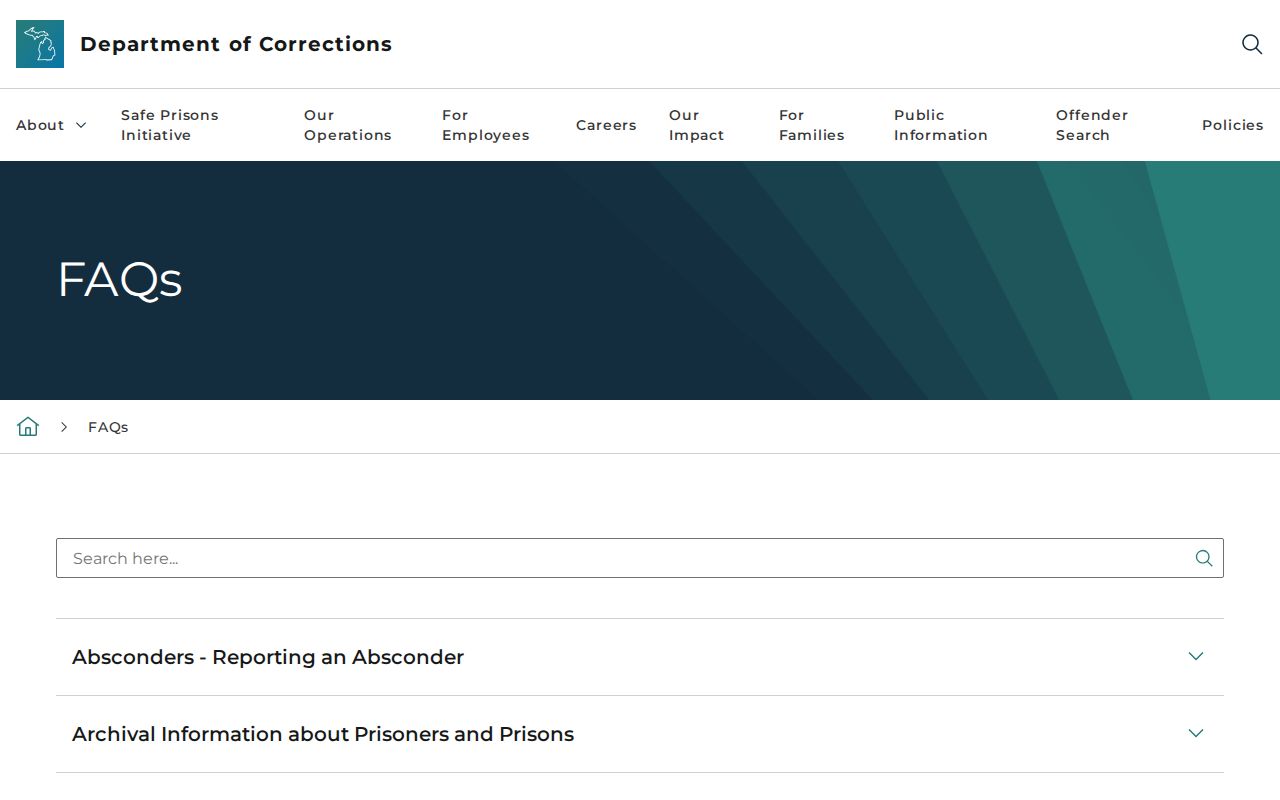
Those exact labels should be preserved because an eligibility date, prison departure, and final discharge answer three different questions.
| OTIS field | How to read it |
|---|---|
| Earliest Release Date | Initial ordinary parole jurisdiction, not a scheduled walk-out. |
| Maximum Discharge Date | Maximum endpoint if parole does not occur, subject to the governing rules. |
| Date Paroled | Past date of prison departure or acquisition of parole status. |
| Discharge Date | Past date when MDOC jurisdiction ended, often after parole. |
Why Leelanau Release Dates Change
A date changes when its legal or operational inputs change. At the county jail, the key inputs include the sentence judgment, time-served credit, all pending charges, good-time status, and the controlling sentencing county. At MDOC, the calculation may be affected by amended judgments, sentence structure, a Board decision, disciplinary history, or placement work after a favorable decision. A new hold can also change where the person goes even when one sentence reaches its end.
| Factor | Possible effect | Best confirming source |
|---|---|---|
| Corrected jail credit | Moves a county or state calculation | Sentencing court and custodian |
| Good-time loss or restoration | Changes a qualifying county outdate | Leelanau Jail Control |
| Consecutive sentence | Pushes the controlling endpoint later | Judgment and MDOC |
| Detainer or hold | May cause transfer instead of community release | Holding and receiving agencies |
| Parole grant or denial | Changes the path after eligibility | MDOC status and Board process |
| Resentencing or amended judgment | Changes one or more calculation inputs | Sentencing court |
MDOC says parole review commonly begins before eligibility, yet a positive decision still precedes physical release processing. Placement and required notice work may remain. A grant can also be suspended before departure if new adverse information or misconduct arises. Neither the review date nor the decision date should be reported as the walk-out date.
A court order may change the legal basis without producing an immediate exit. Jail or prison staff still check other charges, detainers, and commitments before departure. A detainer is a request or authority from another agency that can lead to continued custody or transfer. In that case, one sentence may reach its endpoint while the person moves to another county, MDOC, federal, or immigration custody. The correct record should name the next authority when that detail is public.
Errors require the right correction route. A sentence or jail-credit error that comes from the judgment belongs with the sentencing court. An OTIS status concern tied to supervision belongs with the listed field office. MDOC states that it updates OTIS when directed by a court order or supervising agent. General OTIS accuracy questions may be sent to correctionsinfo@michigan.gov. A changed public field should then be checked against the amended source, not treated as unexplained movement.
Confirm Leelanau Actual Release
For a county outdate, use the official Leelanau Sheriff contact and call the Leelanau County Correctional Facility at 231-256-8661. Ask whether the date is current, whether another hold exists, and whether the person will leave for the community or another agency. The jail's posted timing rule says a locally sentenced inmate leaves at 6:00 a.m. on the outdate when the required 15-percent jail-cost down payment is made, or at 11:00 p.m. without it. That timing rule does not govern bond, immediate court release, transfer, or an inmate boarded for another county.
For state custody, check OTIS again after the expected event. Date Paroled is the better historical field for physical prison departure when it appears. Discharge Date marks the end of jurisdiction and may follow years later. A Leelanau County VINELink check can provide a pending custody-change alert, but the resulting message should still be confirmed with the agency that supplied it.
Life and special sentences require their own statutory review. Mandatory life without parole has no ordinary ERD. Parolable-life rules and judicial objections cannot be compressed into a simple date calculator. Use the judgment, the applicable section of MCL 791.234, and MDOC's record rather than extrapolating from an ordinary indeterminate sentence. For documentary county proof, the Leelanau County FOIA route can seek the retained outdate and release entries.
Note: A release date answers when one custody status ends; it does not by itself show that every hold, supervision term, or case has ended.